|
Getting your Trinity Audio player ready...
|
Download the full PDF “Wordle Clue Today” for easy offline reading.
Wordle Clue Today: How to Find the Right Hint and Solve the Puzzle Every Time
There is a specific kind of morning frustration that only Wordle players understand. You have had your coffee. You are awake. You type in your first word, and the grid stares back at you with a row of grey tiles. By guess four, panic begins to set in. You open a new tab and type: wordle clue today.
You are not alone. Millions of players do exactly this every single day — and there is a smart way to use today’s Wordle clue without ruining the experience for yourself.
This guide walks you through how Wordle clues work, where to find reliable ones, and how to build the thinking skills that make you less dependent on them over time.
What Exactly Is a Wordle Clue?
A Wordle clue is any piece of information that helps you move closer to the correct five-letter word without necessarily handing you the answer. The game itself is built entirely around clues — every guess you make generates color-coded feedback that functions as the game’s native hint system.
Here is how the built-in clue system works:
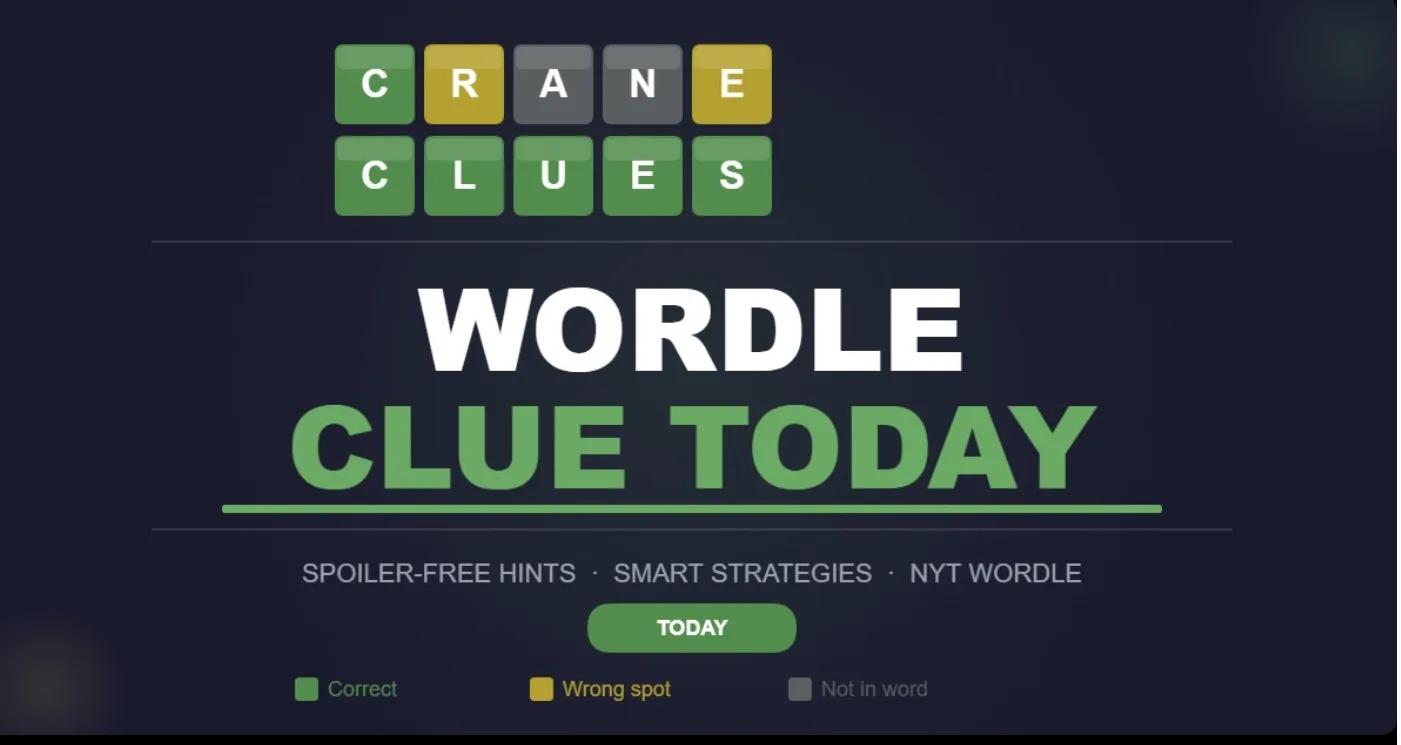
- Green tile — The letter is correct and sitting in the right position.
- Yellow tile — The letter exists in the word but belongs in a different spot.
- Grey tile — The letter does not appear in the word at all.
These three signals are the foundation of every Wordle solve. When players search for a “wordle clue today,” they are usually looking for a supplementary nudge — something beyond tile colors — to help them crack a particularly tricky puzzle.
You May Also Read – Wordle Hints & Answer for Today (January 9, 2026) – Clues, Solution & Strategy
Why Today’s Wordle Clue Is So Heavily Searched
Wordle was created by software engineer Josh Wardle as a personal project for his partner and released publicly in October 2021. The New York Times acquired it in January 2022, and it has remained one of the most visited sections of the NYT Games platform ever since.
The daily format is central to its appeal — and its frustration. One puzzle. One word. Six attempts. No second chances until tomorrow. That structure creates real stakes, which is exactly why so many players reach for a clue when the pressure builds.
The difficulty also varies significantly from day to day. Some answers are common, everyday words. Others are genuinely obscure — words that technically exist but rarely appear in conversation. On those harder days, needing a clue is not a weakness. It is a reasonable response to an unreasonable puzzle.
Levels of Wordle Clues: From Gentle Nudge to Near-Answer
Not all clues are created equal. The best approach is to use the lightest clue that gets your brain moving again, rather than jumping straight to a full reveal. Here is a practical framework:
Level 1 — Category Clue
This is the softest possible hint. A category clue tells you the word belongs to a general group: it is a type of animal, a cooking term, something related to weather, or a piece of clothing. This preserves the puzzle almost entirely while giving your brain a new angle to work from.
Most reputable Wordle hint sites publish category clues first, before any letter information, specifically for players who want minimal interference.
Level 2 — First Letter Clue
Knowing the starting letter of today’s Wordle answer is a significant but fair assist. It eliminates hundreds of possible words immediately and lets you construct guesses that explore the remaining letters more efficiently. Many players find this is all they need to get unstuck.
Level 3 — Vowel Placement Clue
Five-letter English words almost always contain at least one or two vowels, and their placement dramatically shapes what the word can be. A clue like “the word has an A in the second position” anchors your thinking around a structural constraint and helps you filter mentally through possibilities much faster.
Level 4 — Multiple Letter Clue
At this stage, you know two or three confirmed letters and their positions. This is close to a near-solve, and most experienced players can finish from here without needing the full answer. It is the last reasonable stopping point before you cross into spoiler territory.
You May Also Read – Wordle Today Hints: Easy Clues & Smart Tricks to Win Daily (2026)
Where to Find Reliable Wordle Clues Today
The internet is full of Wordle clue pages, but quality varies. Some are genuinely helpful, offering tiered hints in a spoiler-safe format. Others bury the answer in the first paragraph under a thin pretense of being a “hint” page.
Here is what to look for when choosing a source:
Tiered structure — A trustworthy clue page separates hints by level. You should be able to read only as far as you need, with the full answer clearly gated below a spoiler warning or a scroll barrier.
Daily updates — Wordle refreshes every midnight, so clue pages that are not updated daily are useless or misleading. Check the publication date on any hint article before you read it.
No clickbait design — Some sites intentionally place the answer image or text where you cannot avoid seeing it while scrolling for a clue. A well-designed hint page respects the player’s experience.
The NYT Games page — The New York Times itself occasionally provides context around puzzle themes and past answers in its games section (nytimes.com/games/wordle). It is worth bookmarking as your primary source for the official puzzle.
How to Read Your Own Clues Better
Here is an underappreciated truth: most players already have enough clues in their grid by guess three or four. They just are not reading them efficiently. Before you search for an external clue, run through this mental checklist:
Check your yellow tiles first. Yellow means the letter is real — it just needs to move. If you have a yellow R in position two, try it in position one, three, four, or five on your next guess. Do not place it in the same spot again.
Respect your grey tiles. Grey letters are elimination data. They tell you with certainty that a letter does not exist in the word. Many players unconsciously repeat grey letters in later guesses, wasting turns on information they already have.
Build on your greens. Confirmed green letters are your scaffolding. Every subsequent guess should be structured around them. If you have G-R-_ -_ -_ confirmed, think of every five-letter word that begins with GR and work from there.
Think in word families. Once you have two or three confirmed letters, related words cluster together. GRANT, GRAZE, GROAN, and GREET all share a pattern. Running through a family of words mentally is faster and more productive than guessing randomly.
Common Mistakes That Make Wordle Harder Than It Needs to Be
A lot of daily frustration with Wordle comes from habits that are easy to fix once you spot them.
Starting with a weak opening word. Your first guess sets up everything that follows. Words rich in common letters — E, A, R, O, T, S, L, I, N — give you the most feedback from a single guess. Words like CRANE, SLATE, RAISE, or AUDIO are popular opening choices for good reason. They hit high-frequency letters across multiple positions.
Playing the same guess twice. If CRANE gives you nothing on Monday, that does not make it a bad word. It gave you five letters worth of elimination data. Play a different strong opener Tuesday and vary your approach.
Ignoring Hard Mode strategically. Wordle’s Hard Mode requires you to use confirmed letters in every subsequent guess. This forces more disciplined play and actually improves your overall solving ability over time — though it also makes the puzzle genuinely harder on tricky days.
Rushing. Wordle has no timer. There is no penalty for sitting with the grid for five minutes before your next guess. Slower, more deliberate thinking produces better guesses than speed.
When a Clue Becomes a Spoiler — and Why It Matters
The Wordle community runs on a shared social contract: you do not reveal the answer before people have had a chance to play. This is why the emoji grid format — sharing your result as colored squares rather than words — became the standard way to post results online.
A clue respects the puzzle. A spoiler ends it. If you are searching for today’s Wordle clue, be intentional about how far you scroll on any hint page. Many sites structure their content specifically so you can stop reading the moment you have enough information.
The difference between a hint and a spoiler is agency. Clues give it to you. Spoilers take it away.
You May Also Read – Wordle Hint Explained: Get Today’s Clue Without Spoilers
Building Skills So You Need Fewer Clues
The most satisfying Wordle journey is the one where you gradually need external clues less often. This happens naturally as you build pattern recognition — an intuitive sense of which letter combinations are common in English, which positions vowels tend to occupy, and how to exploit elimination logic efficiently.
Players who use clues thoughtfully, rather than just reaching for the answer, tend to internalize these patterns faster. Each puzzle where you use a category clue and then solve the rest yourself teaches you something. Each puzzle where you jump straight to the answer teaches you nothing.
Use today’s Wordle clue as a bridge — not a destination.
Final Word: Your Wordle Clue Today Is Just the Beginning
Searching for a Wordle clue today is one of the smartest moves a daily puzzle player can make — as long as you use it as a stepping stone, not a shortcut.
The best players treat every clue as a learning moment. A category hint sharpens your vocabulary. A first-letter nudge trains your pattern thinking. Even on the days you need extra help, you are still building the instincts that make tomorrow’s puzzle easier.
Come back daily for fresh Wordle clues, spoiler-free hints, and strategies that keep your streak alive. The grid resets every midnight — and so does your chance to solve it smarter than yesterday.
FAQ – Wordle Clue Today
1. What is the Wordle clue for today?
Today’s Wordle clue varies daily, as the New York Times publishes a brand-new five-letter word every midnight. For today’s puzzle, look for a category-based hint first — such as whether the word relates to nature, food, or everyday objects — before seeking letter-specific clues. This approach keeps the puzzle engaging while giving your brain the nudge it needs to move forward.
2. What do the colors mean in Wordle clues?
Wordle uses three colors as its built-in clue system:
🟩 Green — The letter is correct and in the right position
🟨 Yellow — The letter is in the word but in the wrong position
⬜ Grey — The letter does not appear in the word at all
Reading these color clues accurately after every guess is the single most important skill in Wordle.
3. What is the best starting word for Wordle?
The best Wordle starting words contain high-frequency English letters — particularly E, A, R, O, T, S, L, and N. Popular and statistically strong openers include CRANE, SLATE, RAISE, ADIEU, and AUDIO. These words maximize the clue information you receive from your very first guess, giving you the strongest possible foundation for the rest of the puzzle.
4. Where can I find today’s Wordle clue without spoilers?
The safest place to find today’s Wordle clue without spoilers is a hint page that uses a tiered format — presenting a category clue first, then a letter clue, and only revealing the full answer at the very end behind a clear spoiler warning. The official puzzle lives at nytimes.com/games/wordle. Many reputable puzzle and gaming sites also publish daily spoiler-free clues with clearly separated hint levels.
5. What time does the new Wordle clue come out each day?
The new Wordle puzzle — and therefore a fresh clue — becomes available every day at midnight in your local time zone. The New York Times syncs the puzzle refresh to local time, which means players worldwide get access to the new word at the same relative moment in their day, rather than a single fixed global time.
6. Why is today’s Wordle so hard?
Some days, the New York Times selects words that are technically common but rarely used in everyday conversation — words with unusual letter combinations, double letters, or uncommon endings like -ATCH, -OUGH, or -TION. On these days, even experienced players struggle. If today’s Wordle feels unusually difficult, you are almost certainly not alone — social media tends to light up with complaints on hard-word days, which is itself a clue that the puzzle is genuinely challenging.
7. Can I get a Wordle clue without losing my streak?
Yes — using a Wordle clue or hint does not affect your streak in any way. Your streak is tracked by the New York Times based solely on whether you solve the puzzle within six guesses, regardless of any external hints you consult. Looking up a category clue or a first-letter hint is completely fair and has no impact on your official score or streak count.
Written – by Pavan Kumar
Pavan Kumar is an IT professional and the founder of Nexdigit. He writes clear, practical guides about smartphones, software, gaming, and everyday technology. His goal is to simplify complex tech topics so readers can easily understand what matters most before buying devices, fixing problems, or exploring new digital tools.